

Jellyfin Offers Free Hardware Transcoding, Plex Charges $250
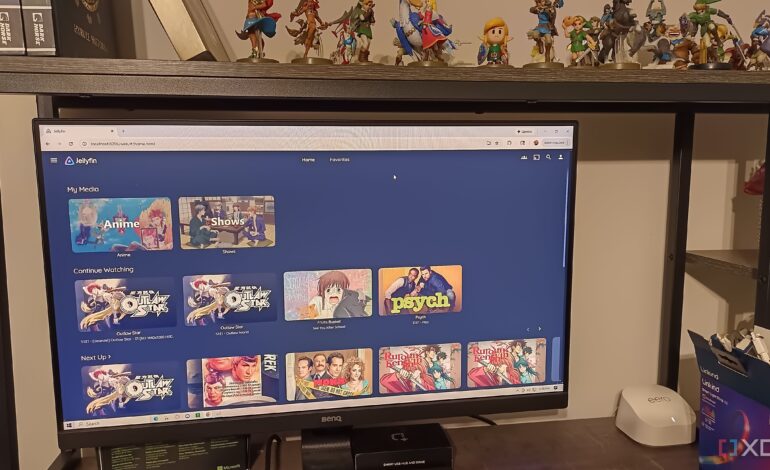

Streaming services have evolved significantly, and the decision between using Jellyfin and Plex has become increasingly complex. While both platforms facilitate access to personal media libraries, Jellyfin’s commitment to free hardware transcoding starkly contrasts with Plex’s recent pricing model, which now demands a hefty $250 for its Plex Pass subscription to unlock the same capabilities.
Jellyfin has emerged as a strong contender in the media streaming landscape by providing hardware transcoding at no cost. This feature allows users to efficiently stream media from devices like the Raspberry Pi 5 or a mini PC equipped with an Intel N100, even under heavy loads. In contrast, Plex has placed its transcoding feature behind a paywall, which raises questions about the value proposition for users who seek efficient streaming capabilities without incurring additional costs.
Understanding the Importance of Hardware Transcoding
Hardware transcoding has become essential for modern media streaming. Given the variety of formats, bitrates, and audio tracks used in personal media libraries, the ability to offload processing tasks to dedicated hardware becomes vital. This not only enhances performance but also ensures that servers remain responsive, even with multiple simultaneous users.
Users quickly realize the benefits of hardware transcoding when they encounter unsupported audio tracks or experience bandwidth limitations. In these situations, Jellyfin allows users to capitalize on the full potential of their hardware without requiring a subscription. Conversely, Plex’s requirement for a subscription to access the same feature creates a barrier that is increasingly difficult for users to justify.
Evaluating the Cost of Plex Pass
The Plex Pass subscription has transformed from a convenient upgrade to what feels like an unnecessary toll for users. At $250 for a lifetime license, the cost exceeds that of many entry-level hardware options, including the Raspberry Pi 5. This pricing structure creates a disconnect, where users find themselves paying more to enable features that their hardware can already perform.
Jellyfin’s model, rooted in open-source principles, allows users to access vital features such as hardware transcoding without financial constraints. This approach fosters a more innovative environment, encouraging experimentation with low-cost systems, while Plex’s model risks alienating potential users who are unwilling to pay for basic functionalities.
Despite the pricing challenges, Plex maintains a reputation for delivering one of the most polished media interfaces available. The platform offers a seamless user experience, enhanced by features such as automatic intro detection, rich metadata, and integrated streaming services. These elements contribute to a cohesive experience that is appealing, particularly for users who prefer a straightforward setup.
Nevertheless, the user experience gap is narrowing. Jellyfin has made significant strides in refining its interface and improving overall usability. Through active community involvement, users can contribute to the platform’s growth, helping to enhance features like transcoding controls and playback settings without being locked out by paywalls.
As Jellyfin continues to improve, the gap between the two platforms diminishes. For many users, particularly those utilizing compact and efficient systems like the Raspberry Pi 5 or Intel N100, the value of free hardware transcoding is becoming a decisive factor.
In conclusion, while both Jellyfin and Plex present viable options for streaming personal media, the disparity in their approaches to hardware transcoding is drawing clear lines in the sand. Jellyfin’s free service model positions it favorably for users who prioritize functionality and cost-effectiveness, while Plex’s subscription model raises important questions about the value of its offerings. As the landscape evolves, users will continue to weigh the benefits of each platform, ultimately determining which one aligns best with their streaming needs.