

U.S. Immigration Enforcement Escalates with Urban Raids
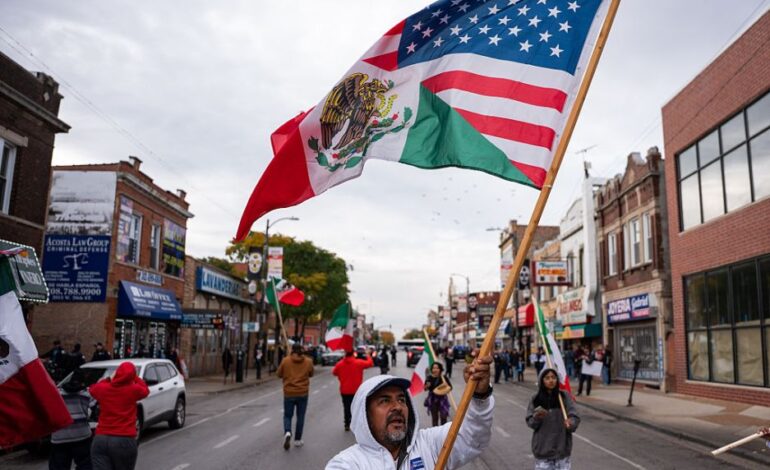

UPDATE: U.S. immigration enforcement is undergoing a dramatic shift as federal agents ramp up operations in major urban areas, including Chicago and Los Angeles. New reports confirm that Immigration and Customs Enforcement (ICE) agents are conducting surprise raids, marking a significant change in strategy that targets immigrant communities nationwide.
This urgent development comes as the Trump administration intensifies its crackdown on immigration, pushing a narrative of an “invasion” that critics argue is fundamentally flawed. The escalation of these tactics raises serious questions about civil liberties and the treatment of immigrants in America’s most populous cities.
Historically, the United States has actively invited Mexican migrants to address labor shortages, especially during and after World War II. The Bracero Program from 1942 to 1964 facilitated the migration of over 4 million Mexican workers, showing a stark contrast to the current narrative that portrays immigration as an unwelcome crisis.
As ICE agents become synonymous with a national immigrant purge, their actions are increasingly met with public scrutiny. Critics demand transparency and accountability from federal officers, calling for agents to “drop their masks.” However, the administration’s tactics continue unabated, leaving communities in fear.
The implications of this aggressive enforcement are profound, particularly for Mexican communities that have historically been integral to America’s labor force. The U.S. has flipped its immigration policies from welcoming to restrictive, yet still relies heavily on immigrant labor for essential sectors like agriculture.
In the mid-20th century, Mexican migrants were encouraged to cross into the U.S. to fill labor gaps, especially as American men were deployed overseas during WWII. However, the U.S. soon found itself in a quandary as the Mexican government began to question the implications of this mass migration. By the mid-1950s, Mexico had halted the Bracero Program due to widespread mistreatment of its citizens abroad, leading to significant diplomatic tensions.
The Trump administration’s rhetoric mirrors past campaigns like Operation Wetback, which sought to control undocumented immigration through intimidation rather than addressing the labor demands that fueled migration. The selective memory of this historical context underscores a persistent reliance on foreign labor while vilifying the very workers who keep American agriculture afloat.
What happens next? As the current administration continues its harsh immigration practices, observers are closely monitoring potential backlash from both immigrant communities and broader civic society. The emotional toll of these actions is palpable, with families living in fear and uncertainty while lawmakers debate the future of immigration policies.
This situation remains fluid, and updates are expected as protests against ICE raids gain momentum across the nation. The urgency of the matter cannot be overstated; the need for humane immigration reform has never been more critical.
Stay tuned for further updates on this developing story as the impact of these federal actions ripples through communities nationwide.