Chicago Public Schools Boost Graduation Rates, Face College Completion Challenges
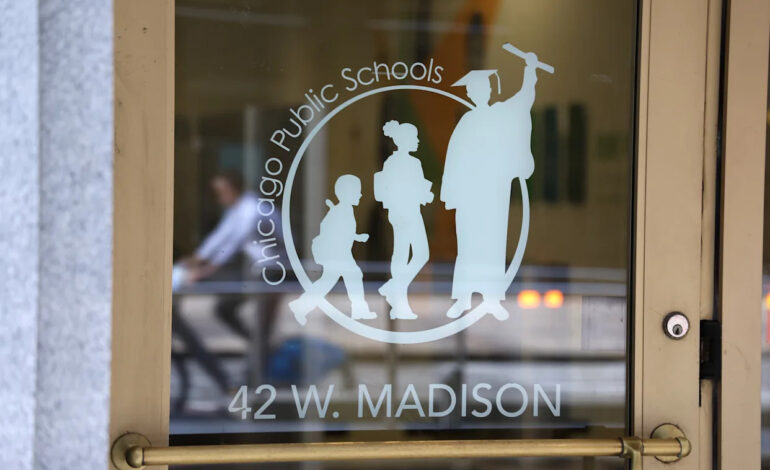

Graduation rates for students in Chicago Public Schools (CPS) have reached near record highs, yet the transition to college completion presents significant challenges. A recent report from the University of Chicago Consortium on School Research and the To&Through Project reveals that only half of CPS graduates who enroll in college complete their degree within a decade. The overall college completion rate for CPS alumni stands at 48%, markedly lower than the national average of 64%.
The findings highlight a critical gap between high school success and post-secondary achievement. “Getting students into college is a great first step, but starting college and not completing is not a good outcome, for the most part,” stated Alex Usher, director of data and research at the To&Through Project. “There’s definitely work to be done ahead.”
Researchers employed a measure known as the postsecondary attainment index to illustrate the challenges ahead. If 100 students began ninth grade at CPS today, the projections indicate that 84 would graduate from high school, 58 would enroll in college immediately, and only 30 would earn a college credential within ten years. These figures closely mirror those from the previous year’s report.
Challenges to degree completion are multifaceted. Experts point to soaring tuition costs, complex program requirements, and a lack of support systems as significant barriers to student success. The report acknowledges these challenges but suggests that improving outcomes is possible. “To me, the real value of the attainment index is almost like a rallying point, or a motivating point,” Usher remarked. “The system can, and has changed, and this doesn’t have to be a prediction or destiny.”
Disparities in completion rates are pronounced, particularly across race and gender. Among the graduating class of 2018, Asian and white women exhibited the highest college completion rates at 81%, while Black men faced the lowest rates at just 27%. Black women and Latino men followed, with completion rates of 40% each. A study released in July found that students from Illinois’s lowest-income families are three times more likely to drop out compared to their wealthier counterparts.
Many low-income students attend for-profit colleges, which often lead to substantial debt, and they are disproportionately represented at community colleges. These institutions present their own challenges, including complicated transfer processes. Usher emphasized the need for colleges and universities to enhance student support systems, stating, “The student body at a lot of colleges and universities is changing. They need to change in response if we’re going to move these completion rates.”
The class of 2024, which forms the basis of this data, began high school during the COVID-19 pandemic, a factor that has likely affected their academic outcomes. The transition to remote learning exacerbated existing achievement gaps and led to increased rates of chronic absenteeism. Researchers noted that the pandemic’s lingering effects are likely reflected in current student outcomes. Additional challenges included delays in the Free Application for Federal Student Aid (FAFSA), which impacted financial aid packages, and the class’s experience with the Supreme Court’s decision to end affirmative action, potentially affecting students’ feelings of belonging in higher education.
Despite these challenges, there are positive trends in the data. Among the CPS class of 2024, 66% enrolled in a two-year or four-year college in the first summer or fall after graduation, surpassing the national average of 61%. Furthermore, a record number of CPS alumni—7,368 from the class of 2018—graduated from college with degrees or certificates this year.
“I think it’s just such a testament to the work that the district and the wider ecosystem in Chicago has been doing around college enrollment,” Usher commented. Over the past decade, CPS has demonstrated significant progress across various metrics. Researchers previously predicted that only 73% of ninth graders would graduate and 40% would enroll in a four-year college. This year’s figures show an increase to 84% graduating and 43% enrolling in a four-year institution.
While graduation rates have slightly declined, they remain above the post-COVID low of 82% recorded in 2021. Usher concluded, “I don’t think most Chicagoans know how much progress we’ve made in the last 20 years, and even in the last 10 years.” The findings underscore both the ongoing challenges and the potential for future improvements in the educational landscape of Chicago.