

Ukrainian Drone Interceptor Takes Down Armed Russian Shahed

UPDATE: A Ukrainian drone manufacturer has just confirmed a groundbreaking development in aerial warfare. Wild Hornets announced that its Sting interceptor drone successfully shot down a Russian Shahed drone armed with an R-60 air-to-air missile. This incident marks a significant shift in tactics on the battlefield, highlighting the escalating drone warfare between Ukraine and Russia.
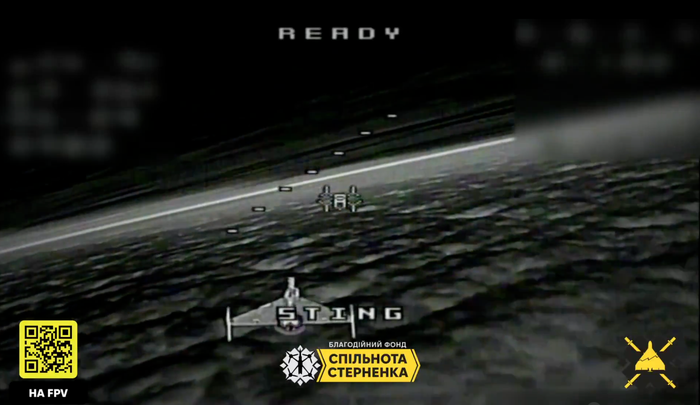
In a statement released earlier today, Wild Hornets reported that the Darknode Battalion of Kyiv’s 412th Nemesis Brigade accomplished this feat on December 1, 2025. The engagement is notable as it represents the first instance of a Sting interceptor downing a Shahed drone equipped with an air-to-air missile. This unusual configuration suggests a new strategy from Russia to counter Ukrainian aerial defenses.
The intercepted Shahed drone, typically designed for explosive attacks, was repurposed with the R-60 missile, intended for targeting Ukrainian helicopters that have been pivotal in intercepting such drones. Alex Roslin, Wild Hornets’ foreign support coordinator, emphasized the importance of this engagement, stating, “This is the first confirmed case of a Sting interceptor taking down a Shahed armed with an air-to-air missile.”
Video footage captured during the incident shows the Russian variant of the Iranian-designed Shahed-136, referred to as Geran-2, equipped with the missile. The R-60 missile, developed by the Soviet Union in the 1970s, boasts a range of 10 kilometers (6 miles) and has seen extensive use in various conflicts, raising alarms about its new application on drones.
Military experts, including Sergey Beskrestnov, noted that this marks the first detection of such missile armament on a Shahed drone. Beskrestnov stated, “The combination is designed to destroy helicopters and tactical aviation aircraft that hunt Shaheds,” highlighting the evolving nature of this conflict.
The urgency of this development cannot be overstated. Ukraine has increasingly relied on its air forces, including fighter jets and helicopters, to combat the growing threat of Russian drones. The integration of missiles onto these drones could significantly alter the balance of aerial encounters, potentially limiting Ukraine’s air defenses.
In response to the escalating drone threat, Ukraine has turned to cost-effective solutions like the Sting interceptor, which is valued at approximately $2,500. Wild Hornets claims that these interceptors can effectively neutralize over 100 Shahed drones, which are estimated to cost between $20,000 and $70,000, in a single night.
This incident is not an isolated occurrence; there have been reports of similar adaptations in drone warfare. Ukrainian naval drones equipped with surface-to-air missiles have previously targeted Russian aircraft over the Black Sea, showcasing the dynamic nature of drone technology in modern combat.
As the conflict continues, the implications of this engagement extend beyond immediate military tactics. It signifies a shift in how both sides approach aerial warfare, with Russia seemingly adapting its approach to challenge Ukraine’s defenses more aggressively.
Ukraine’s Deputy Minister of Defense for Innovation, Lt. Col. Yurii Myronenko, previously indicated that Russia is actively testing modified drones to disrupt Ukrainian air operations. This recent development underscores the ongoing cat-and-mouse game of defense technology between the two nations.
As of now, neither Russia’s defense ministry nor its embassy in the U.S. has commented on this incident. The implications of this engagement are far-reaching, signaling a new phase in the war and raising questions about future tactics and technologies employed by both sides.
The world will be watching closely as these developments unfold, and the military strategies of both Ukraine and Russia continue to evolve in response to each other’s capabilities.