

Netanyahu Praises UN’s Approval of Gaza Plan Amid Hamas Rejection

Israeli Prime Minister Benjamin Netanyahu expressed strong support for the United Nations’ recent endorsement of the Trump administration’s plan for governance and security in Gaza. The U.N. Security Council passed the resolution on Monday, which includes the establishment of an international stabilization force aimed at restoring order in the war-torn region. In contrast, the militant group Hamas denounced the plan as a tool of foreign domination.
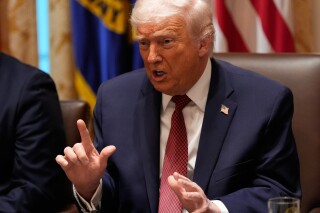
The approved resolution outlines the creation of a transitional authority known as the Board of Peace, which will be overseen by President Donald Trump. This board is envisioned as a step towards potentially achieving an independent Palestinian state. Netanyahu’s office stated that the plan promotes peace by requiring “full demilitarization, disarmament, and deradicalization of Gaza.”
The international force is tasked with a broad mandate, which includes managing borders, ensuring security, and disarming militant groups within Gaza. The resolution grants authorization for this force and the Board of Peace until the end of 2027. Central to the U.S. plan is the aim to permanently disarm non-state armed factions, with provisions allowing the force to use necessary measures to fulfill its mission, reflecting U.N. language that may imply military action.
Hamas, however, rejected the resolution, arguing that the disarmament provisions compromise the neutrality of the proposed force and align it with the interests of the occupying powers. A spokesperson for Hamas stated that the resolution fails to meet the political and humanitarian needs of the Palestinian people, insisting that any international force should operate solely under U.N. supervision and remain at Gaza’s borders to monitor ceasefire conditions.
In contrast, the Palestinian Authority welcomed the U.N. decision and expressed readiness to implement the resolution immediately. The Authority indicated its willingness to collaborate with the U.S., the U.N., and various Arab and European nations. Despite this, many Palestinians regard the Authority as weak and corrupt, particularly due to its security coordination with Israel, which is widely unpopular.
The U.N. resolution emerged after nearly two weeks of negotiations, during which Arab nations and Palestinian representatives urged the U.S. to explicitly address Palestinian self-determination. While the proposal does not provide a definitive timeline for statehood, it suggests that advancements in Gaza’s reconstruction and reforms within the Palestinian Authority could eventually lead to a credible pathway to independence.
The U.S. confirmed its commitment to facilitating dialogue between Israel and the Palestinians, aiming to establish a framework for peaceful coexistence. Support from Arab and Muslim countries was pivotal for the resolution’s passage, as these nations could potentially contribute to the international force.
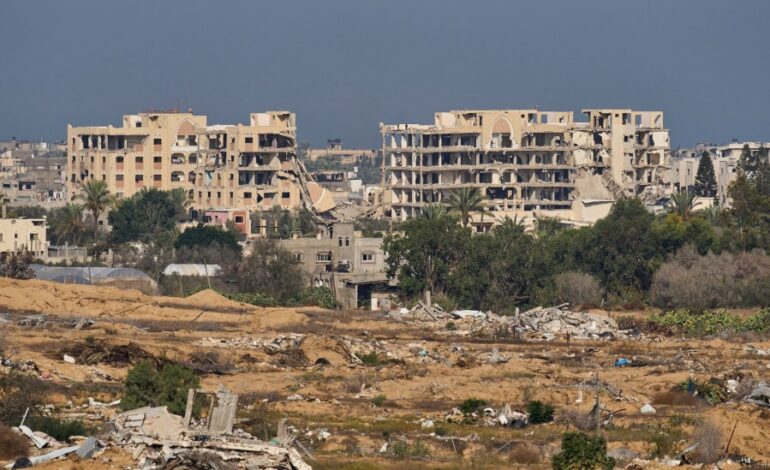
The ongoing conflict has exacerbated humanitarian crises in Gaza, following Hamas’ unexpected attack on southern Israel on October 7, 2023, resulting in approximately 1,200 fatalities in Israel. Israeli military actions have reportedly claimed over 69,000 Palestinian lives, according to the Gaza Health Ministry, which indicates that many of the deceased are women and children.
U.K. Foreign Secretary Yvette Cooper emphasized the need for the international community to collectively advance humanitarian efforts in Gaza, calling for urgent actions to open crossings, lift restrictions, and facilitate aid delivery.
President Trump announced that the members of the Board of Peace would be revealed in the coming weeks, alongside additional forthcoming initiatives. The stabilization troops are expected to secure Gaza’s borders and collaborate with a newly trained Palestinian police force. As the international force establishes its presence, the resolution states that Israeli forces will gradually withdraw from Gaza, contingent on mutually agreed standards and timelines.
This resolution may provide a glimmer of hope for maintaining the fragile ceasefire in Gaza, which has been a focal point of international concern following the recent escalation of violence.